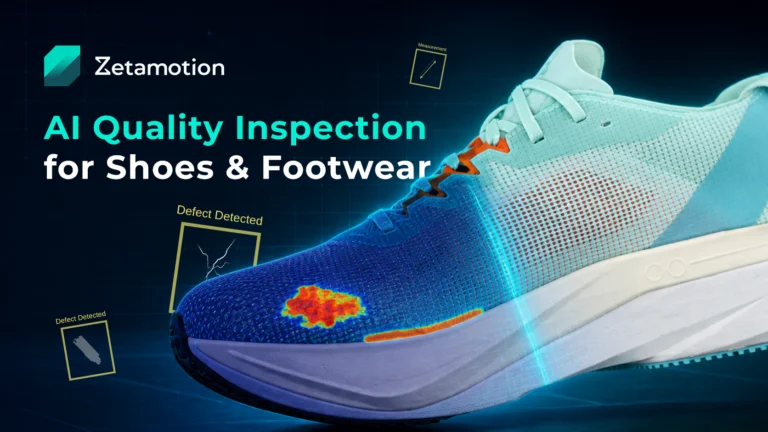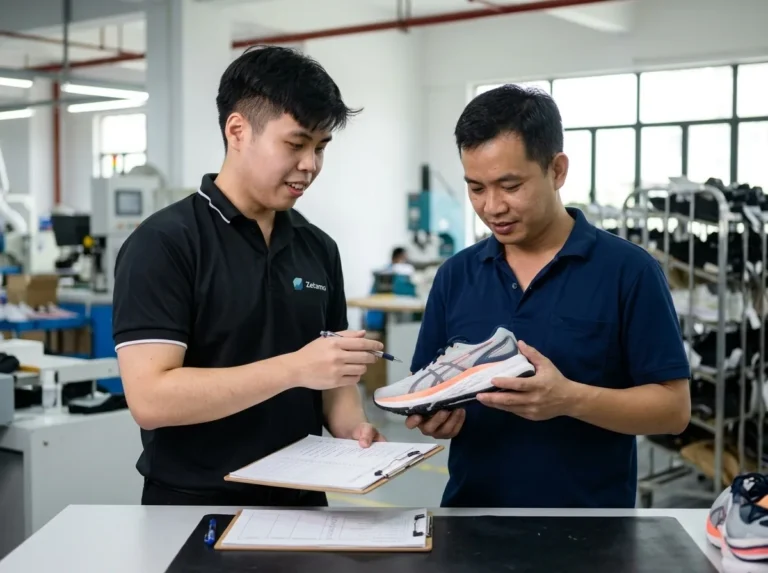
Manual inspection, rule-based machine vision, and AI inspection all have a place in manufacturing quality control.
The question is not whether AI is always better. It is not. A simple rule-based machine vision system can be fast, reliable, and cost-effective when the product is stable, the lighting is controlled, and the defect can be described clearly. But many inspection problems do not behave that neatly.
Surfaces vary. Materials reflect light. Defects appear in different shapes. Product variants change. Borderline quality decisions depend on context. That is where rule-based machine vision can start to struggle, and where AI inspection becomes worth considering.
This article explains the practical difference between rule-based machine vision and AI inspection, where each approach works best, and how manufacturers can decide whether they need rules, AI, or a hybrid inspection workflow.
For a broader overview of the full category, see our guide to automated visual inspection for manufacturing.
Quick answer: rule-based vision vs AI inspection
| Approach | Best fit | Where it struggles |
|---|---|---|
| Rule-based machine vision | Stable products, fixed geometry, known measurements, presence checks, controlled lighting. | Variation, texture, glare, changing defects, borderline visual judgment. |
| AI inspection | Variable products, subtle defects, complex surfaces, rare or changing defect types. | Needs good data, validation, review workflows, and ongoing improvement. |
| Hybrid inspection | Production systems where rules handle measurements and AI handles visual complexity. | Requires clear ownership of thresholds, review, and model updates. |
Rule-based machine vision is usually enough when the inspection task can be written as a clear visual rule. AI inspection becomes useful when the inspection task depends on learned visual patterns rather than fixed measurements.
In production, the best answer is often not one or the other. Many strong inspection systems combine cameras, lighting, rules, AI models, pass/fail thresholds, dashboards, and human review.
What rule-based machine vision does well
Rule-based machine vision has been used in factories for decades because it solves many inspection tasks extremely well.
A rule-based system follows programmed logic. It might check whether a hole is present, whether a label is aligned, whether a part is the right size, whether an edge is inside tolerance, or whether a barcode can be read.
This works especially well when the inspection target is predictable. Rule-based vision can be a strong fit for:
- Measuring a fixed feature on a machined part.
- Checking whether a component is present or missing.
- Verifying label position under controlled lighting.
- Reading codes or markings.
- Confirming that an object is in the correct orientation.
- Counting features with clear contrast.
- Detecting a known defect with a stable shape and appearance.
The advantage is clarity. The system is explainable because the rules are explicit. If the edge must be within a certain number of pixels, the system checks that condition. If the contrast threshold is crossed, the product fails. If the measured diameter is outside tolerance, the part is rejected.
When the product, lighting, camera angle, and defect criteria stay consistent, this can be fast and dependable.
Where rule-based vision starts to break
Rule-based inspection becomes harder when the visual world is less controlled than the rule expects.
That is common in real manufacturing. A defect may not have one fixed shape. A material may have natural texture. A surface may reflect light differently from one part to the next. A product may have dozens of variants. A small mark may be acceptable in one zone but unacceptable in another.
In those cases, the system can become brittle.
A rule that works on Monday may create false rejects on Tuesday because the material batch changed. A threshold that catches one scratch may miss another because the angle or contrast is different. A rule that works on a clean surface may fail on leather, glass, fabric, composites, coated metal, paper, or asphalt shingles because acceptable variation is part of the product.
The common failure pattern is simple: the rule sees variation, but it does not understand whether that variation matters.
That can create two expensive problems:
- False negatives: real defects pass inspection.
- False positives: acceptable products are rejected, slowed down, or sent for unnecessary review.
Both are quality problems. Escaped defects create customer risk. False rejects create scrap, rework, downtime, and mistrust in the inspection system.
What AI inspection does differently
AI inspection does not depend only on fixed visual rules. Instead, AI models learn patterns from images.
That matters because many visual defects are easier to recognize than to describe as a rule. An experienced human inspector can often look at a surface and know that something is wrong, even if the defect is not the exact same shape every time. AI inspection tries to capture that kind of pattern recognition in a repeatable system.
Depending on the use case, AI inspection can detect defects, classify defect types, segment the defect area, measure severity, or flag unusual patterns for review.
This makes AI inspection useful for problems where the visual standard is real but difficult to express as simple logic. Examples include:
- Scratches that vary in length, angle, and contrast.
- Bubbles or inclusions inside transparent or reflective materials.
- Surface defects on leather, textiles, composites, coatings, or paper.
- Foreign particles that appear in unpredictable locations.
- Cosmetic defects where severity depends on size and zone.
- New product variants where defect examples are limited.
- Subtle anomalies that are visible but inconsistent.
AI inspection does not remove the need for cameras, lighting, thresholds, or quality logic. It adds a more flexible visual intelligence layer on top of the inspection system.
Why AI is needed for difficult inspection cases
AI becomes useful when the defect cannot be fully described before production begins.
That is the core difference. Rule-based machine vision works best when the inspection target is known, stable, and measurable. AI inspection is better suited to cases where the system needs to learn what acceptable and unacceptable variation look like.
This is especially important for manufacturers dealing with:
Variable materials
Leather grain, textile weave, composite surfaces, paper texture, glass reflection, and coated metals can all contain natural variation. The inspection system must separate acceptable variation from true defects.
Rare defects
Some of the most important defects are also the least common. A manufacturer may not have thousands of real examples available for training or testing.
Changing products
High-mix production creates inspection complexity. A system that works for one variant may need adjustment for another.
Borderline decisions
Quality is not always binary. The same mark may pass in a hidden zone and fail in a visible or safety-critical zone.
This is where AI inspection can turn a difficult visual judgment into a more consistent inspection workflow.
AI inspection still needs good data and validation
AI is not magic. It needs the right inspection data, clear acceptance criteria, and validation against real manufacturing requirements.
This is where many AI inspection projects get stuck. Teams may know what they want to detect, but they do not have enough defect examples. Or the examples they have are inconsistent. Or the defect taxonomy is unclear. Or the model performs well in a test environment but struggles when lighting, handling, or product variation changes on the line.
A practical AI inspection project needs more than a model. It needs:
- A clear defect catalogue.
- Good examples of acceptable and unacceptable variation.
- Imaging that captures the right visual evidence.
- Pass/fail thresholds that match real quality standards.
- A review workflow for uncertain cases.
- Reports that help quality teams understand trends.
- A process for updating the system when products change.
This is why synthetic data is becoming important in AI quality inspection. When real defects are rare, synthetic examples can help train and validate models across defect types, product variants, lighting conditions, and edge cases.
Zetamotion uses synthetic data for quality inspection to reduce dependence on massive manually labeled datasets and help manufacturers start from limited real-world examples.
The strongest production systems are often hybrid
For many manufacturers, the right answer is not rule-based vision or AI inspection. It is both.
Rules are still useful. They can measure features, check geometry, enforce tolerances, apply zone-based criteria, and convert model outputs into pass/fail decisions. AI can handle the harder visual recognition problem: identifying subtle defects, variable patterns, or anomalies that do not fit a fixed rule.
A hybrid inspection workflow might look like this:
- Cameras and lighting capture the product clearly.
- Rule-based logic checks alignment, measurement, zones, or known features.
- AI detects or segments visual defects.
- Inspection thresholds decide whether the defect fails, passes, or needs review.
- Human inspectors review exceptions and borderline cases.
- The system records results for reporting, audits, and continuous improvement.
This is usually more realistic than trying to make inspection fully autonomous on day one. It lets the system reduce repetitive manual work while keeping expert judgment available where it matters most.
Decision checklist: do you need AI inspection?
AI inspection may be worth evaluating if several of these are true:
- Your defects vary in shape, size, location, or appearance.
- Your product surface has natural texture or visual noise.
- Rule-based thresholds create too many false rejects.
- Human inspectors disagree on borderline cases.
- Defects are rare, but costly when missed.
- You inspect many variants or changing product designs.
- Lighting, reflection, transparency, or surface finish makes inspection difficult.
- You need better defect classification and reporting.
- Your quality team needs traceability, not just pass/fail results.
- Your current system works in the lab but struggles on the production line.
Rule-based machine vision may still be enough if the task is stable, measurable, and well controlled. AI becomes more compelling when the inspection problem is visual, variable, and hard to describe as fixed logic.
How Zetamotion approaches AI inspection
Zetamotion approaches inspection as a full manufacturing workflow, not just a camera or model.
With Spectron AI quality control, the inspection process can include synthetic data, model training, configurable inspection rules, defect classification, measurement, reporting, dashboards, human-in-the-loop review, and on-premise deployment.
That matters because the hardest part of AI inspection is often not the first model. It is making the system work reliably with real products, real operators, real thresholds, and real production constraints.
Spectron is designed for inspection cases where conventional approaches struggle: scarce defect data, rare defects, noisy surfaces, many variants, and line-speed requirements. The platform also supports configuration and reporting so quality teams can see what was inspected, what failed, what passed, and what patterns are emerging over time.
In the Aviation Glass case study, Zetamotion reported moving from 20+ minute manual inspections to real-time AI QC, covering 46 product variants and saving more than 1,200 annual inspection hours. That kind of outcome depends on more than AI alone. It depends on the full inspection workflow: data, imaging, thresholds, reporting, and feedback.
FAQ
Is AI inspection better than rule-based machine vision?
Not always. Rule-based machine vision is often better for stable, measurable, predictable tasks. AI inspection is better when defects are variable, subtle, or difficult to define with fixed rules.
When is rule-based machine vision enough?
Rule-based vision is usually enough when the product presentation is stable, the lighting is controlled, and the defect or feature can be described with clear measurements, contrast thresholds, position rules, or presence checks.
Why does AI help with visual inspection?
AI helps because many defects are pattern-recognition problems. They may be easy for a trained inspector to recognize but hard to describe as one fixed rule. AI models can learn those visual patterns from examples.
Can AI inspection work without thousands of defect images?
In many cases, yes, but it depends on the product and defect. Synthetic data, clean reference samples, calibrated images, and human-in-the-loop review can reduce the need for massive real defect datasets.
Does AI replace human inspectors?
Usually, the better goal is to reduce repetitive inspection burden while keeping human expertise in the workflow. Humans are still important for defining quality standards, reviewing borderline cases, and improving the system over time.
Can AI inspection work with existing cameras?
Sometimes. It depends on whether the existing imaging setup captures the right evidence at the right resolution, angle, lighting, and speed. In other cases, camera, lighting, or fixture changes are needed before AI can perform reliably.
Next step
If you are not sure whether your inspection problem needs rule-based vision, AI inspection, or a hybrid workflow, the best first step is to test the use case against your real product, defect targets, and production constraints.
Start with a feasibility inquiry and share what you need to inspect, what defects matter, and what makes the current process difficult.
Start a feasibility inquiry