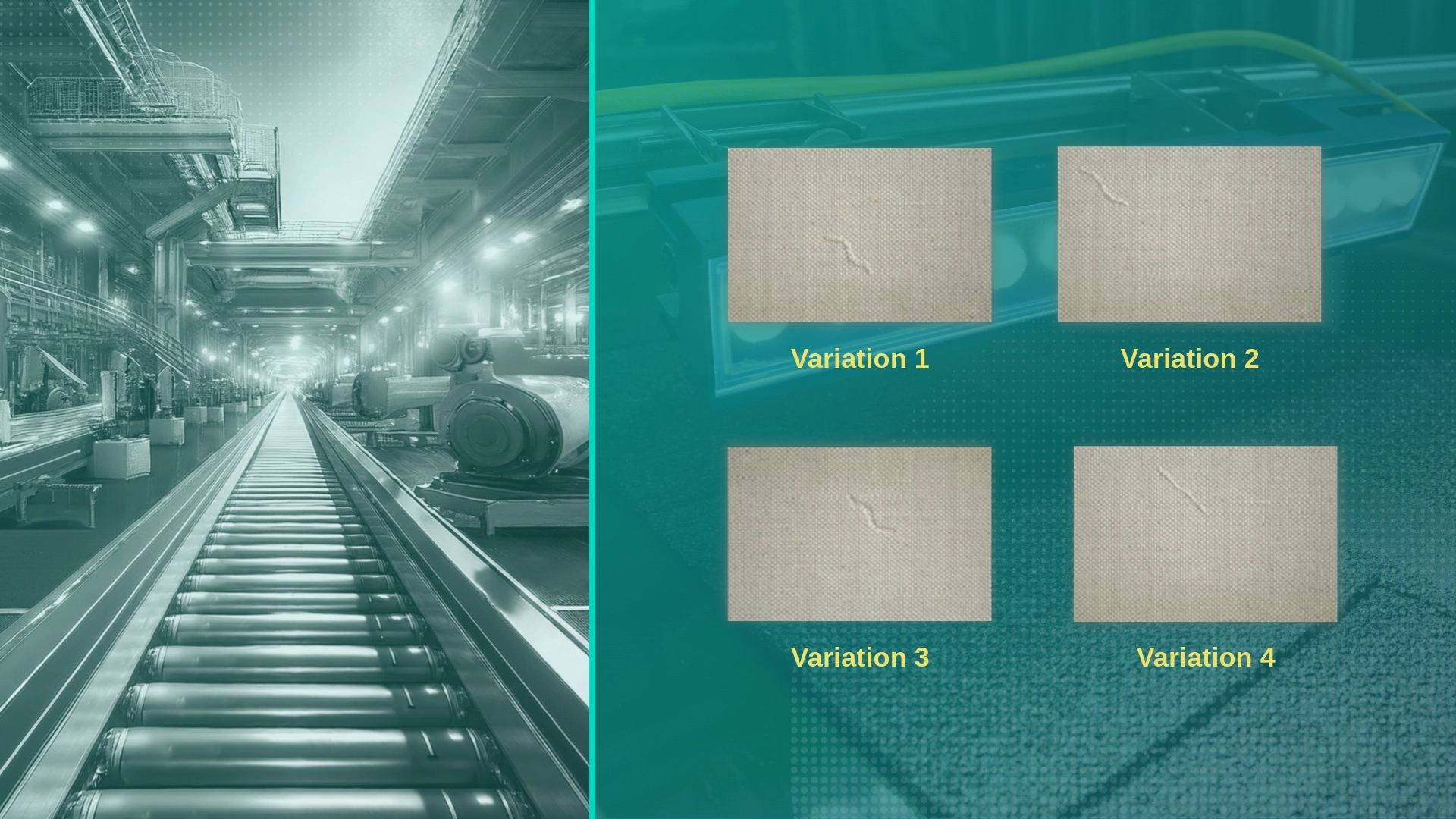
The hardest defects to train an AI inspection model on are often the defects manufacturers care about most.
They are rare. They happen at the edge of the process. They show up under certain lighting, on certain product variants, or after a specific material change. They may be expensive to reproduce, destructive to create, or simply too infrequent to collect in useful numbers.
That creates a frustrating problem for quality teams. You may know exactly what you want an AI inspection system to catch, but you do not have enough real defect images to train it properly.
This is where synthetic data for quality inspection becomes useful.
Synthetic data gives AI inspection models realistic, labeled examples of products, surfaces, defects, masks, lighting conditions, and edge cases before enough real failures have appeared on the line. It does not remove the need for real-world validation, but it can solve the cold-start problem that stops many AI inspection projects before they reach production.
In this guide, we will explain what synthetic data means in manufacturing quality control, why real defect data is often not enough, how synthetic data is created, when it works best, what its limits are, and how Zetamotion uses it with ZELIA and Spectron to move from a few samples to production-ready inspection.
What is synthetic data for quality inspection?
Synthetic data for quality inspection is generated visual data used to train, test, or improve AI inspection models. Instead of relying only on thousands of manually captured and labeled production images, manufacturers can create realistic examples of products and defects under controlled conditions.
In an inspection context, synthetic data can include:
- Clean product surfaces that represent acceptable variation.
- Defect examples such as scratches, cracks, stains, bubbles, inclusions, chips, dents, coating issues, and contamination.
- Pixel-level masks showing exactly where the defect is.
- Labels describing the defect type, location, size, severity, or class.
- Lighting, camera angle, texture, color, geometry, and material variation.
- Product variants that may not yet have enough real production history.
The important phrase here is “for quality inspection.” This is not the same as asking a generic image generator to make pictures that look industrial. Inspection-ready synthetic data must be tied to the real product, real defect criteria, and real decision that the quality team needs to make.
A useful synthetic defect example should help an AI model learn something operationally meaningful:
- What does normal variation look like?
- Where can a defect appear?
- How large or subtle can the defect be?
- Which visual changes matter and which should be accepted?
- What mask or label should be attached to the defect?
- How will this translate into a pass/fail or review decision?
That is why synthetic data works best when it is created as part of a structured inspection workflow, not as a pile of nice-looking images.
Why real defect data is often not enough
The default advice for AI projects is simple: collect more data.
For manufacturing inspection, that advice can be painfully unrealistic.
If a defect is rare, waiting for thousands of real examples may take months or years. If the product is expensive, destructive testing may not be acceptable. If the line is already performing well, the defect rate may be too low to build a balanced dataset. If a new product variant is launching, the defect history may not exist yet.
Quality teams also run into data problems that are less obvious at first.
Real images may be inconsistent. Some are captured under different lighting. Some are blurry. Some show mixed defect types. Some do not include the region the model needs to inspect. Some defects are described differently by different inspectors. Some have no labels at all.
Manual labeling then creates another bottleneck. Drawing masks around small visual defects is slow. It requires expertise. It can vary from person to person. And if the labels are inconsistent, the model learns inconsistent signals.
In practice, many AI inspection pilots stall because the team has enough data to run a demo, but not enough data to handle real production variation.
That gap usually appears around:
- Rare defects that matter but are hard to collect.
- New product launches with no historical failures.
- Many SKUs or product variants.
- Noisy or non-uniform materials.
- Subtle surface defects that are hard to label.
- Edge cases that do not appear in the first dataset.
- Manual annotation work that nobody has time to own.
Synthetic data is not a shortcut around quality expertise. It is a way to turn that expertise into structured training examples faster.
The inspection data gap, in one picture
| What manufacturers often have | What AI inspection models need |
|---|---|
| A few defect photos | Many variations of each defect type |
| A defect catalogue | Labeled examples tied to each defect class |
| Clean product samples | Normal variation across surfaces, lighting, and variants |
| Manual pass/fail judgement | Repeatable labels, masks, and thresholds |
| New product variants | Training examples before defects appear at scale |
| Production pressure | Fast iteration without months of data collection |
Graphic recommendation: turn this table into a simple two-column visual for the blog. Left side: “What the factory has.” Right side: “What the model needs.” Use a sample surface/defect visual between them.
How synthetic data helps train AI inspection models
Synthetic data helps by increasing coverage.
Instead of training a model on only the few defect examples available today, the team can generate realistic variations that show how a defect might appear across different products, surfaces, lighting conditions, positions, sizes, and severities.
A typical synthetic data workflow for inspection looks like this:
- Start with clean product images, scans, CAD files, or calibrated photos.
- Collect a small number of real defect examples where available.
- Define the defect taxonomy and pass/fail criteria.
- Generate realistic synthetic defect variations.
- Attach masks, labels, metadata, and class information automatically.
- Train the AI inspection model.
- Validate the model against real production images.
- Use operator feedback and production evidence to improve the system.
The value is not only more images. The value is controlled variation.
With synthetic data, a team can deliberately create examples that real production may not provide quickly enough:
- A scratch at different lengths and angles.
- A bubble in different locations.
- A stain at different contrast levels.
- A chip near a critical edge.
- A defect on multiple product colors.
- A surface anomaly under different lighting conditions.
- A rare defect on a new product variant.
That helps the model avoid learning too narrow a pattern. It also gives the team a stronger starting point before the system sees more real production data.
Clean samples, defect samples, and masks
One of the most useful ideas in AI inspection is the difference between normal variation and true defects.
Manufacturing products are rarely identical in a visual sense. Textiles have weave variation. Leather has grain. Glass reflects the environment. Asphalt shingles have texture. Composites, coatings, paper, metal, tile, and plastics all have natural variation.
An inspection model needs to learn both sides of the problem:
- What is acceptable variation?
- What is a defect that should be flagged?
The clean examples teach the model what “normal” can look like. The defect examples teach the model what should be detected. Masks help by showing the exact pixels associated with a defect, rather than forcing the model to infer from a broad image-level label.
Here is the practical difference. A clean sample teaches the model what acceptable product texture can look like. A defect sample teaches the model what should be detected. Synthetic data then expands those patterns into more positions, sizes, lighting conditions, severities, and product variants.
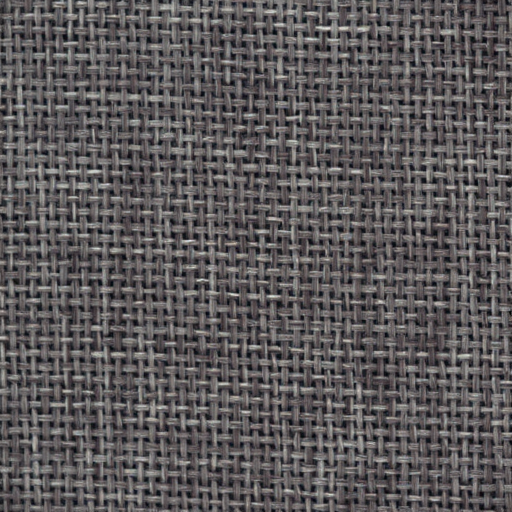
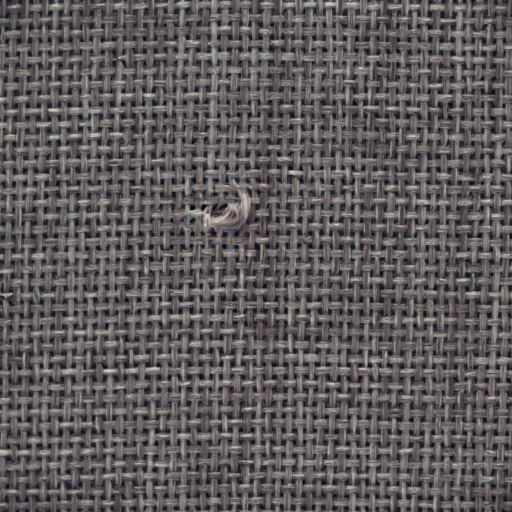
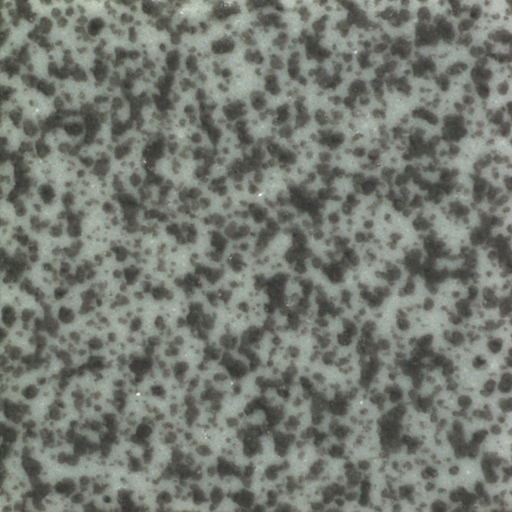
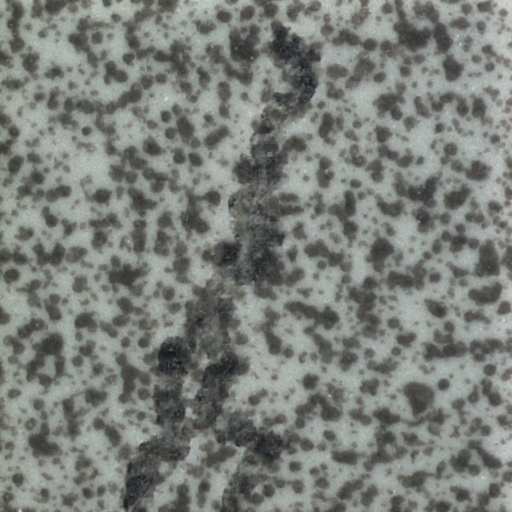
These examples show why synthetic data is useful for quality inspection: the model must learn both acceptable variation and the defect signal, especially on textured, noisy, or repeating surfaces.
What annotation looks like in practice
For AI quality inspection, annotation is the bridge between an image and a training signal. A broad image-level label such as “defect” is sometimes useful, but many inspection models need more detail: where the defect is, which pixels belong to it, what class it belongs to, and whether the defect should trigger fail, review, or measurement.
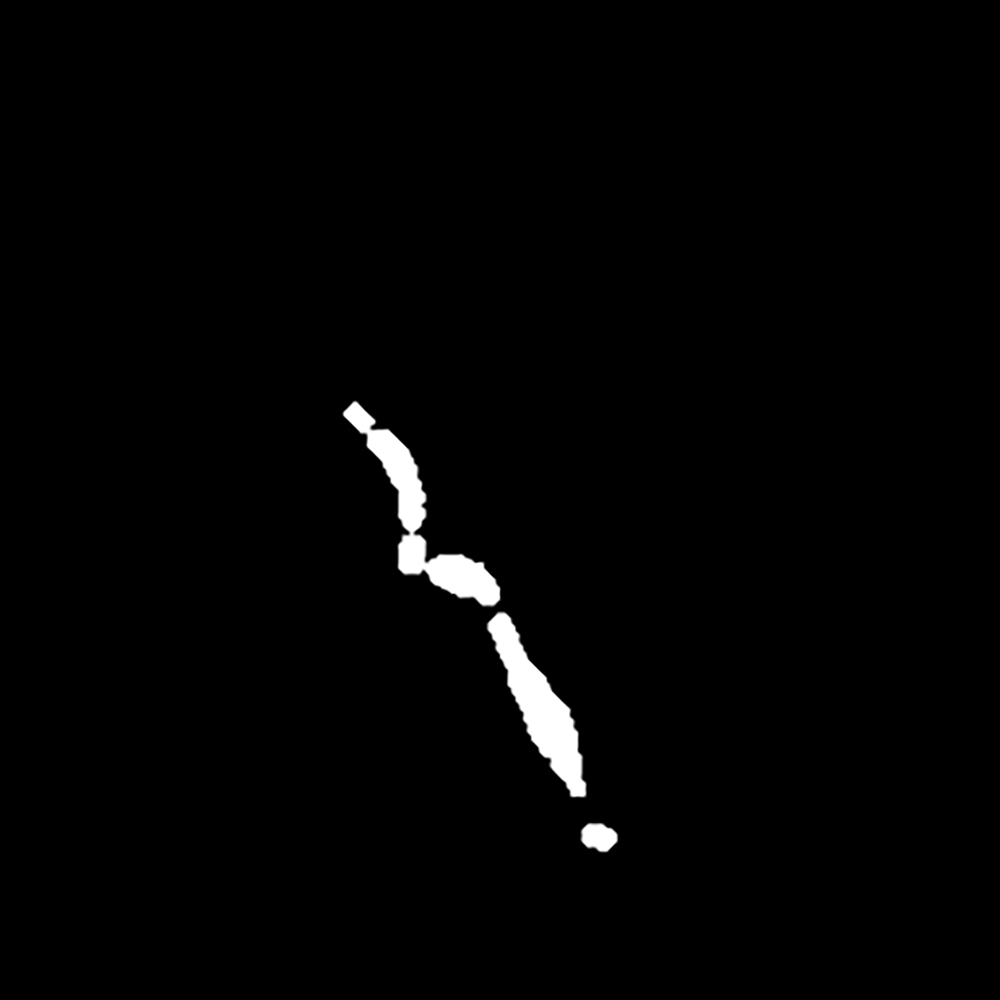
That is why masks matter. A mask tells the model which part of the image is the actual defect rather than the surrounding normal surface. When synthetic data is generated with masks and metadata, the training set becomes faster to prepare and more consistent than a manually labeled dataset built one image at a time.
In a production workflow, those annotations should connect back to the defect taxonomy: defect type, severity, product zone, allowed tolerance, and the action the operator should take.
Synthetic data vs real data: which does the model need?
The strongest answer is usually: both.
Real data is essential because it anchors the model in actual production conditions. It shows the real camera, real lighting, real material behavior, real handling, and real defect appearance. It is especially important for calibration, validation, and final production testing.
Synthetic data is valuable because it fills the gaps real data cannot cover quickly enough. It can expand rare defect examples, create controlled edge cases, reduce manual labeling, and help the model learn before enough production failures have occurred.
Think of the two data sources this way:
| Data type | Best role in inspection |
|---|---|
| Real clean images | Show actual acceptable production variation |
| Real defect images | Anchor the model in true defect appearance |
| Synthetic defect images | Expand rare and underrepresented defect examples |
| Synthetic masks and labels | Reduce manual annotation effort |
| Real validation images | Prove the model works under production-like conditions |
| Human feedback | Correct edge cases and improve trust over time |
Synthetic data should not be treated as a fantasy replacement for reality. It is most powerful when it is grounded in real samples and then validated against real production images.
For a deeper comparison, read Synthetic Data vs Real Data in Quality Control.
Where synthetic data works best
Synthetic data is not equally useful for every inspection problem. It is strongest when the inspection task has real value but the available data is limited, imbalanced, or hard to label.
Here are the best-fit situations.
Rare defect detection
Rare defects are the classic synthetic data use case.
The defect may happen only occasionally, but missing it may be expensive. Waiting for hundreds or thousands of real examples is not practical. Synthetic data can create additional examples so the model learns the visual pattern before the defect appears often enough in production.
New product variants
New variants often arrive before enough defect data exists. That is a problem for high-mix manufacturers where colors, shapes, finishes, materials, and customer requirements change frequently.
Synthetic data can help generate variant-specific examples from a smaller starting set, reducing the time needed to onboard each new product.
Noisy or non-uniform surfaces
Some products have surfaces that naturally vary. Textiles, leather, composites, glass, roofing materials, paper, coatings, stone, and organic-looking textures can all confuse simple inspection systems.
Synthetic data can help model a wider range of acceptable variation and defect variation, so the AI learns to separate normal texture from true anomalies.
Coatings, metal surfaces, and discoloration
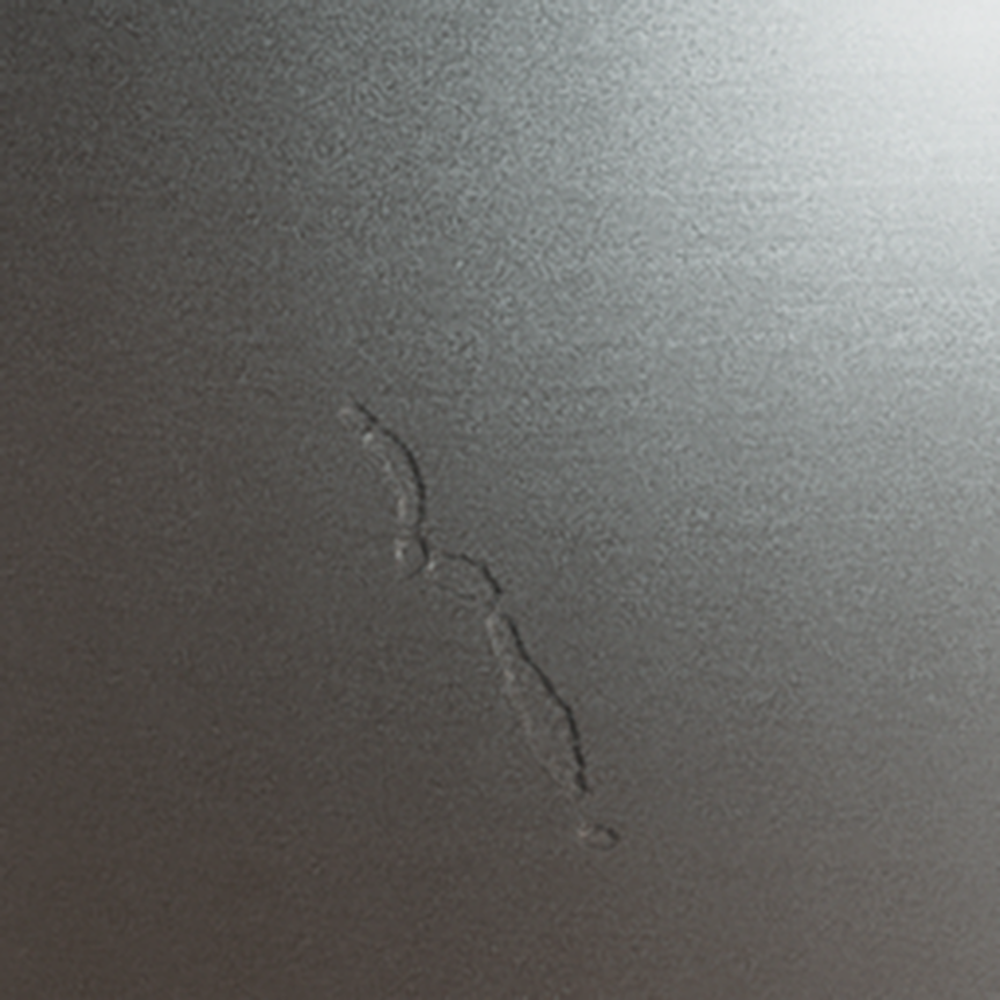
Surface defects on metal, coated, or brushed materials can be especially hard to collect in balanced quantities. A defect may appear as a subtle crack, rust mark, discoloration, abrasion, or coating change, and the signal can shift with lighting direction or surface finish. Synthetic examples are useful here because the same base surface can be expanded into multiple controlled defect variants, each with a corresponding mask.
Expensive or destructive defects
Some defects are costly to create on purpose. Others require destructive testing or represent failures no team wants to reproduce at scale.
Synthetic data lets the team model these defects without damaging large numbers of real products.
Missing masks or labels
Manual labeling is one of the least glamorous parts of AI inspection, and one of the easiest to underestimate.
If every defect variant is generated with masks and metadata, the training data becomes more consistent and faster to prepare.
Early feasibility testing
Before a manufacturer commits to a full deployment, synthetic data can help test whether the inspection problem is feasible. It gives the team a way to explore model behavior before months of production data have been collected.
Where synthetic data needs caution
Synthetic data is powerful, but it is not magic.
The most important caution is that synthetic data still needs real-world validation. A model trained with synthetic images must be tested against real images captured under production-like conditions.
Synthetic data also depends on good inputs. If the defect taxonomy is unclear, the synthetic examples may reinforce confusion. If the lighting or material behavior is unrealistic, the model may learn patterns that do not transfer well. If the generated defects do not match the factory’s actual quality criteria, the training set may look impressive but fail operationally.
Use synthetic data carefully when:
- Defect definitions are not yet agreed.
- The product surface changes dramatically in production.
- Lighting and camera conditions are unstable.
- The defect is highly dependent on physical behavior that is hard to simulate.
- The inspection is safety-critical and requires strict validation.
- The team wants to avoid real testing entirely.
The right mindset is simple: synthetic data accelerates the path to a useful model, but production validation earns trust.
What manufacturers need to provide
Manufacturers do not always need a huge dataset to begin.
Depending on the inspection problem, useful starting inputs can include:
- Clean product images.
- A few real defect examples.
- A defect catalogue or QC checklist.
- CAD files, scans, or calibrated photos where available.
- Product variant information.
- Tolerance thresholds and severity rules.
- Line-speed requirements.
- Camera position, lighting, and field-of-view constraints.
- Examples of acceptable variation that should not fail.
The most helpful input is often not a perfect dataset. It is a clear definition of the inspection decision.
For example:
- Which defects should always fail?
- Which defects should be measured by size or location?
- Which surface variation is acceptable?
- Which product zones are critical?
- What should happen when the model is uncertain?
Those answers shape the data plan. They also help avoid a common problem: training an AI model before the quality standard has been clearly defined.
The role of defect taxonomy
A defect taxonomy is the shared language of the inspection system.
It defines the defect categories, visual examples, severity levels, and decision rules the system should use. Without a taxonomy, different people may label the same mark differently. One inspector may call it a scratch. Another may call it a scuff. A third may treat it as acceptable variation.
That ambiguity is manageable in a human conversation, but it becomes a problem for model training.
A good taxonomy helps answer:
- What defect types matter?
- How are they visually different?
- Which defects are cosmetic and which are critical?
- How should size, location, or severity affect the decision?
- Which product variants need separate rules?
- What should be recorded in reports?
Synthetic data becomes much more valuable when it is generated against a clear taxonomy. Each generated example can carry the right class, mask, metadata, and decision context.
How Zetamotion uses synthetic data in AI quality inspection
Zetamotion uses synthetic data as part of a broader inspection workflow, not as a standalone trick.
The workflow connects three pieces:
- ZELIA, the generative AI-powered learning and inspection assistant.
- Spectron, the production AI quality-control platform.
- Zetamotion’s deployment process, which includes data curation, model training, validation, hardware integration, reporting, and human-in-the-loop improvement.
ZELIA helps turn a small set of clean and defect samples into synthetic datasets and trained inspection models. The goal is to reduce the cold-start problem: manufacturers do not need to wait until they have thousands of labeled defect examples before they can start building an AI inspection workflow.
Spectron then connects trained inspection models to production reality. It supports defect detection, measurement, classification, configurable pass/fail rules, dashboards, reports, product onboarding, and human review.
That connection matters. Training data alone does not improve quality. The model has to become part of a working inspection process: image capture, decision logic, thresholds, review, reporting, and continuous improvement.
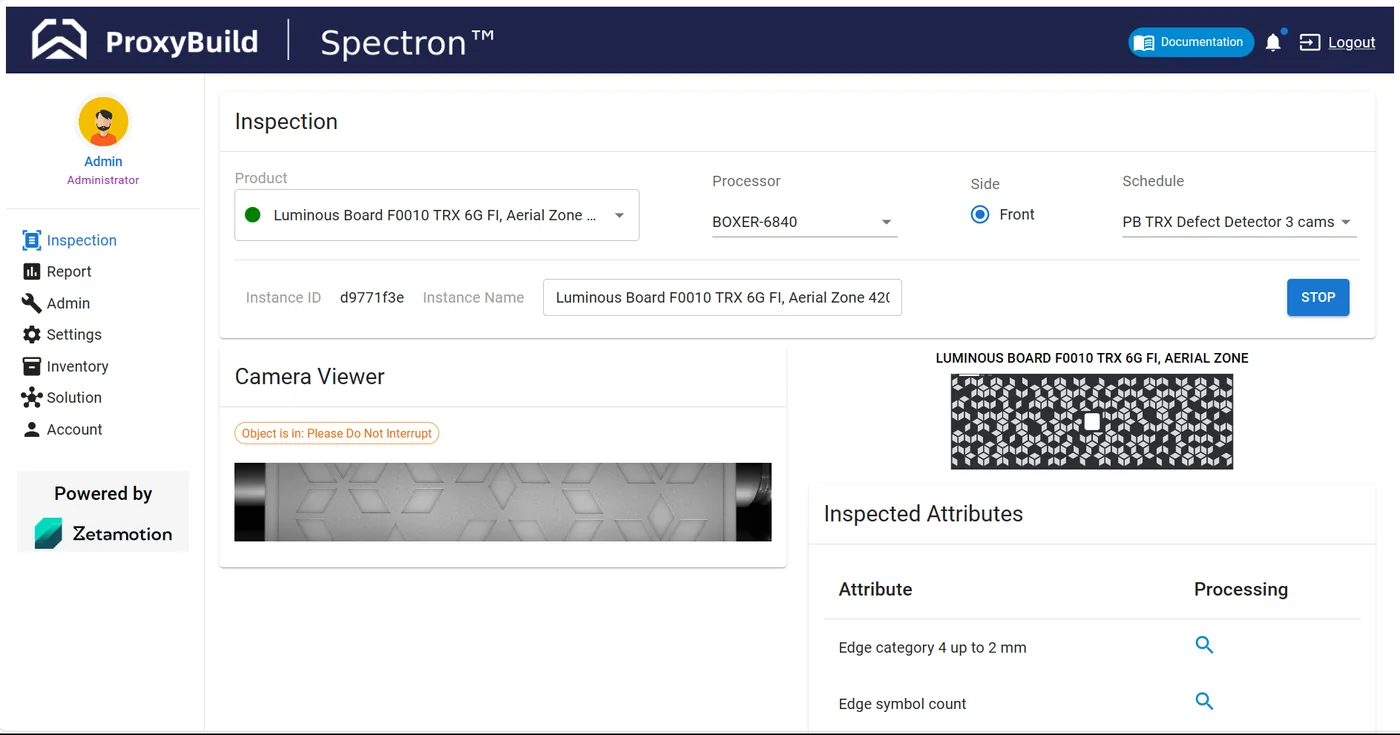
Example workflow: from rare defect to production inspection
Imagine a manufacturer that produces glossy panels. The quality team needs to detect scratches, bubbles, and inclusions. The problem is that the most important defects are rare, and the few examples on hand are inconsistent.
A practical workflow could look like this:
- The manufacturer shares clean panel images and a small number of defect examples.
- The quality team defines defect classes, severity levels, and critical zones.
- Zetamotion reviews the inspection setup, including lighting, camera angle, line speed, and product variants.
- ZELIA generates synthetic defect variations with masks and metadata.
- The team reviews generated examples and filters out anything that does not match production reality.
- The AI inspection model is trained on verified clean, real defect, and synthetic defect examples.
- The model is tested against real production-like images.
- Spectron is configured with pass/fail rules, thresholds, dashboards, and operator review.
- During deployment, human feedback is used to improve edge cases and reduce uncertainty.
This is the important shift: the project is not just “make AI detect scratches.” It is “build a repeatable inspection workflow around the defect, the product, the line, and the decision.”
Benefits of synthetic data for quality inspection
The benefits are practical.
Faster model onboarding
Synthetic data can reduce the time spent waiting for real defect examples. That helps teams move from feasibility to model training faster, especially for new variants or rare defects.
Less manual labeling
Generated defects can include masks, labels, and metadata from the start. That reduces manual annotation effort and makes the dataset more consistent.
Better rare-defect coverage
The model can see more variations of the defects that matter, including size, position, angle, contrast, and severity differences.
More controlled edge cases
Synthetic data lets teams deliberately test scenarios that may not appear in the first real dataset. That is useful when edge cases are expensive or slow to collect.
Faster variant adaptation
Manufacturers with many SKUs or frequent product changes can use synthetic data to speed up onboarding for new product variants.
Better use of human expertise
Instead of asking inspectors to label thousands of images manually, teams can use their expertise to define defect criteria, review generated examples, validate model behavior, and improve edge cases.
Limits of synthetic data
Good synthetic data makes AI inspection faster to train, but it does not remove the need for discipline.
The main limits are:
- It must be grounded in realistic product appearance.
- It must match the defect taxonomy.
- It must be reviewed for realism and relevance.
- It must be validated against real production images.
- It cannot fix unclear quality standards.
- It cannot compensate for poor camera or lighting setup.
- It should not replace operator knowledge or production testing.
In other words, synthetic data is not a way to skip inspection engineering. It is a way to make inspection engineering faster and more complete.
How to decide whether synthetic data fits your line
Use this checklist.
Synthetic data is likely worth exploring if:
- The defects you care about are rare.
- You have too few real defect images.
- Manual labeling is slowing the project.
- You are launching new product variants.
- Your product has noisy, textured, reflective, or non-uniform surfaces.
- Your current model overfits to a small dataset.
- You need to test edge cases before they appear often in production.
- You need faster feasibility evidence.
Synthetic data may be less urgent if:
- You already have a large, well-labeled, balanced dataset.
- The inspection task is simple and rule-based.
- Defects are common and easy to collect.
- The product and lighting conditions are highly stable.
Even then, synthetic data can still help with edge cases, variant onboarding, and model stress testing. It just may not be the first thing to solve.
Questions to ask before starting
Before building a synthetic data workflow, answer these questions:
- What defect types should the model learn?
- Which defects are rare but important?
- What examples do we already have?
- What does acceptable variation look like?
- Which product variants need coverage?
- Are labels, masks, or severity rules already defined?
- What real images will we use for validation?
- What false rejects and false accepts can we tolerate?
- Who will review uncertain cases?
- How will the model improve after deployment?
These questions help turn synthetic data from a technical experiment into a production quality tool.
Related synthetic data and AI inspection guides
- Synthetic Data vs Real Data in Quality Control – when each data type works best.
- Where Synthetic Data for Automated Visual Inspection Systems Truly Shine – ideal use cases for synthetic data.
- ZELIA AI Inspection Assistant – the sample-to-model workflow.
- Synthetic Data Generation Service – Zetamotion’s service for filling inspection data gaps.
FAQ
What is synthetic data in quality inspection?
Synthetic data in quality inspection is generated visual data that represents real products, surfaces, defects, masks, labels, and inspection conditions. It helps train AI inspection models when real defect examples are limited or hard to label.
Can synthetic data replace real defect images?
Not completely. Synthetic data is best used to expand and balance the training set, especially for rare defects and edge cases. Real images are still important for calibration, validation, and production testing.
How many real images do manufacturers need to start?
It depends on the product, defect type, and inspection requirements. In many cases, teams can begin with a small set of clean images, a few defect examples, a defect catalogue, and clear QC criteria. More real images improve validation and confidence.
Does synthetic data work for rare defects?
Yes, rare defect detection is one of the strongest use cases. Synthetic data can create realistic variations of rare defects so the model learns what to detect before enough real failures have appeared.
How are synthetic defects labeled?
Synthetic defects can be generated with masks, labels, class information, severity metadata, and location data. This reduces manual labeling effort and helps the model learn the exact defect region.
Do manufacturers need CAD files to generate synthetic data?
Not always. CAD files can help, but calibrated photos, scans, clean product images, and defect examples may be enough depending on the inspection problem.
How do you validate a model trained with synthetic data?
Validation should use real or production-like images. The team should test whether the model detects true defects, avoids false rejects on acceptable variation, handles product variants, and performs under realistic camera and lighting conditions.
What types of defects can synthetic data help with?
Synthetic data can help with scratches, cracks, chips, dents, stains, bubbles, inclusions, coating issues, contamination, edge defects, pattern anomalies, and subtle surface changes, depending on the product and defect definition.
Is synthetic data useful for high-variant production?
Yes. High-variant production is a strong fit because each new product type may not have enough historical defect data. Synthetic data can help speed up variant onboarding and reduce the need to wait for large real datasets.
How does synthetic data reduce manual labeling?
Because generated defects can come with masks and metadata automatically. Instead of drawing every defect boundary by hand, the team can focus on reviewing quality, validating examples, and improving the inspection standard.
Final thought: synthetic data should make inspection more practical
Synthetic data is not valuable because it sounds futuristic. It is valuable because manufacturing inspection has a stubborn, practical problem: the data you need is often not the data you have.
Rare defects are rare. New variants are new. Manual labeling is slow. Factory surfaces are messy. And AI inspection models need enough variation to make reliable decisions.
Synthetic data helps close that gap.
The best results come when synthetic data is tied to real products, real defect criteria, real validation images, and a production workflow that quality teams can trust. That is the difference between generating images and building an inspection system.
If your AI inspection project is blocked by limited defect data, Zetamotion can help assess whether synthetic data is a good fit. Start with your product images, defect catalogue, or inspection target, and we will map the fastest route from samples to a validated inspection model.
Book a feasibility check or explore ZELIA and Spectron.