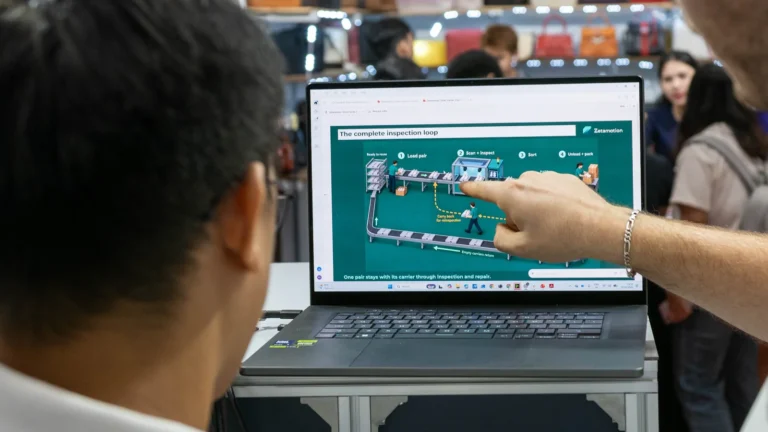
Since we unveiled the Shoe Box, our AI shoe inspection station, at VFM 2026 in Ho Chi Minh City (our recap of the week is here), it has moved from the expo floor to working factory floors, with on-site demonstrations at the factories of major footwear brands and discovery calls with manufacturers across footwear, apparel and textiles.
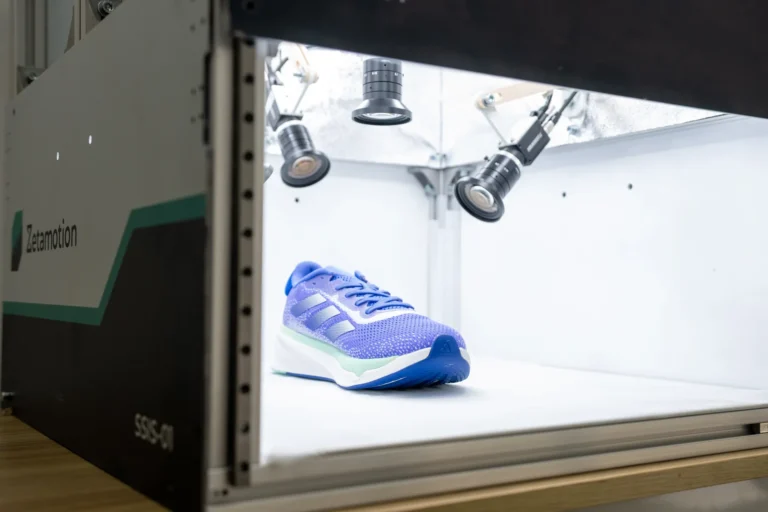
The Shoe Box is a compact station with five cameras and controlled lighting. Our machine vision AI checks each shoe from several angles and records every decision, with the position, size and severity of any defect it finds. It can be deployed as built for final inspection, or adapted around a manufacturer’s own products, defects, line speed and layout. You can watch it run a live inspection here. This article covers what has happened since VFM, why manufacturers are moving now, and where inspection pays back the most.
What has happened since VFM
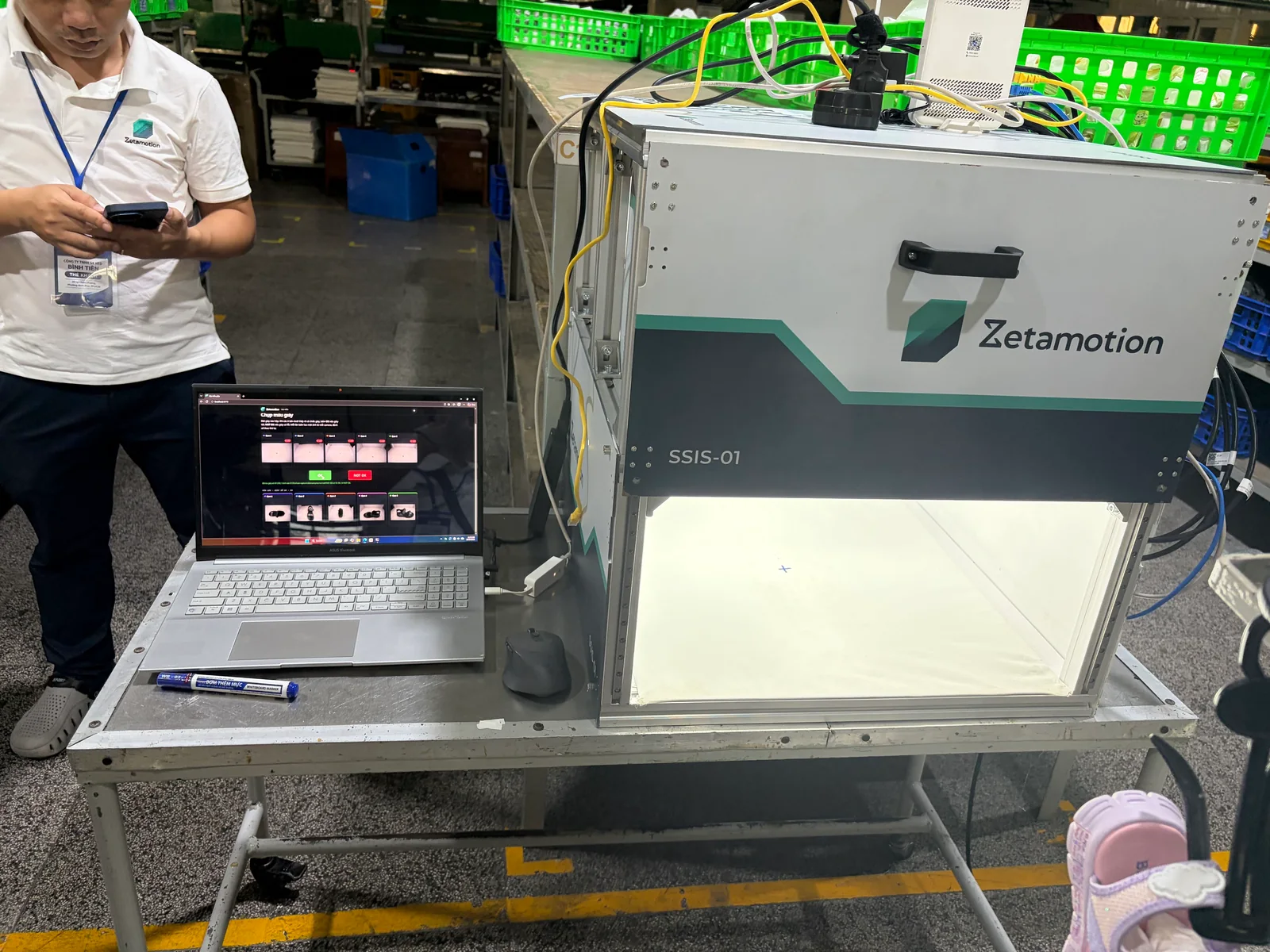
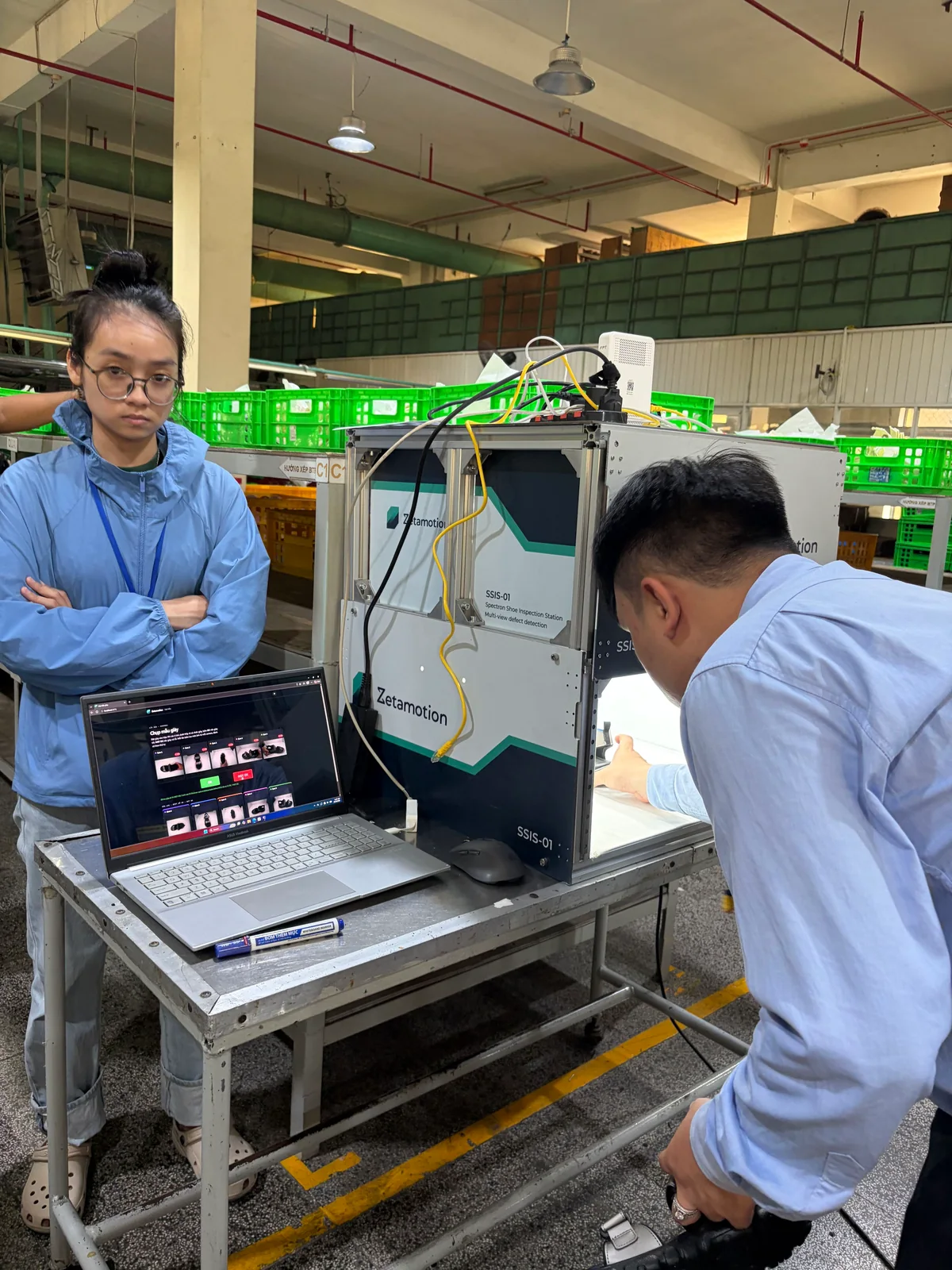
Within weeks of the show, our Vietnam-based engineering team set the station up on the production floor of a major footwear brand and ran the manufacturer’s own products through it alongside their QC team. Their inspectors decided what passed and what didn’t, so the system learned their standard from their own people. More demonstrations and discovery calls have followed with manufacturers across footwear, apparel and textiles, and we are now preparing pilot proposals with several of them.
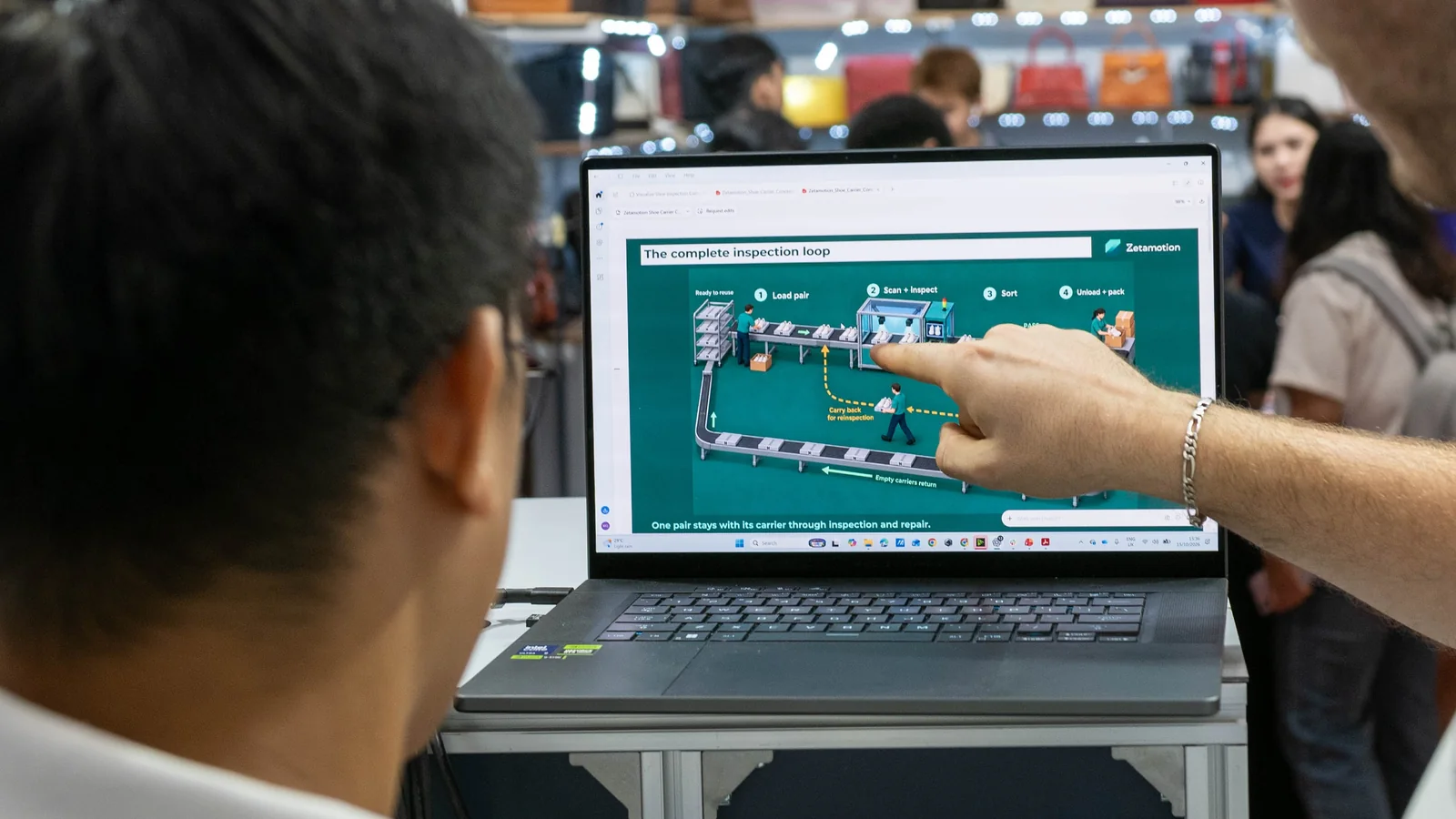
Why are manufacturers moving now?
The interest reflects a wider shift in manufacturing. Brands are asking more of every factory that makes their products, from consistent quality across lines and shifts to a clear record behind each inspection decision. In footwear, where much of the quality control is still done by eye, that is pushing manufacturers to look at how automation can fit their own lines, and to start sooner rather than later.
“The conversations since VFM have moved quickly,” says Dr Wilhelm Klein, our CEO and co-founder. “Manufacturers want inspection that is the same on every shift and every line, with a record behind every decision. Increasingly, that is what their customers and head offices expect to see, and they would rather have it in place before they are asked for it.”
Automation also has to work for the people on the line. The AI takes on the repetitive visual search and makes the clear calls. Experienced inspectors review the borderline cases, and every decision they make, whether to accept, reject or override a detection, is recorded and used to keep improving the model. False rejects come down without the standard being loosened, and the knowledge of a factory’s most experienced inspectors is captured instead of lost.
“The AI does the repetitive looking. The inspectors make the borderline calls, and every one of those calls makes the system better,” Wilhelm adds. “That is how you bring false rejects down without lowering the standard, and it is why the QC teams we work with tend to get on board quickly.”
The real value is in the data
Catching a faulty shoe before it ships is only part of the return. Because every inspection is recorded, the results build into a picture of where defects come from. Over thousands of shoes, patterns start to show: the same glue overflow on one line, a stitching fault that appears after a machine change, a material batch that keeps producing marks.
Once you can see the pattern, you can fix the cause instead of sorting the shoes it affects, one by one. That means less rework, less scrap and fewer defects reaching customers, where returns and recalls cost far more than anything caught on the factory floor. Inspection saves money on the line, and the data keeps adding value long after.
Start earlier: inspecting materials before they become a shoe
The Shoe Box shows final inspection, and many manufacturers start there. But the earlier a defect is caught, the less it costs. A flaw in a hide of leather or a roll of mesh caught on arrival costs a material swap. The same flaw found in a finished shoe carries the cost of every cutting, stitching, bonding and assembly step that went into it.
That is why we also build inspection for incoming materials: checking leather, mesh, textiles and synthetics as they come into the factory, and cut panels before they reach assembly. It is also where the data story is strongest, because defects can be traced straight back to a supplier, a batch or a roll. A line can start with one inspection point, at goods-in or at final QC, and add more over time.
How we build a station around your line
For offline work such as sample validation, final QC and batch release, the Shoe Box can be deployed as built. When inspection needs to run on a line, or start earlier with incoming materials, we design it around three things: which defects matter and where they appear, how fast the line runs, and where in the process inspection should sit.
We run the project end to end through our turnkey deployment service, from mapping your defects and collecting samples to station design, model training, integration with your line systems and a pilot before rollout, so your team does not need in-house AI expertise. Visitors to our VFM stand asked about plenty more, from outsole cameras and pair checks to automatic sorting after inspection, and the answer to all of it was yes. Our VFM recap covers what they asked.
Frequently asked questions
Can I buy the Shoe Box as it is?
Yes. The Shoe Box can be supplied as built, and because the design is already proven, it is the quickest way to start automating shoe inspection. It suits offline checks such as sample validation, final QC and batch release. If your line needs different views, handling or speeds, we adapt it around your products, defects and layout.
Can you inspect materials before they become a shoe?
Yes. We build inspection for incoming leather, mesh, textiles and synthetics, and for cut panels before assembly, so defects are caught before any labour goes into them. The same approach works for fabrics well beyond footwear.
How much data do you need to start?
For an initial evaluation we recommend five or more clean reference images per shoe model or material. Defect examples help, and synthetic data covers defects that are too rare to collect in volume.
Can we test our own products before a factory visit?
Yes. We can test your shoes or material samples in our Ho Chi Minh City lab before a site visit and pilot.
Talk to us about your line
Start with the inspection point that costs you the most, whether that is final QC or the materials coming through the door. Share your product family, defect examples, current workflow and line speed, and we will show you whether the Shoe Box fits as built or what a station for your line would look like.
Ready to talk through your line? Book an intro call.